Sunday, August 28, 2016

The Lives of a Cell

Essay: The Lives of a Cell, by Lewis Thomas

This essay dives into the similarities between man and earth. Humans like to distance themselves from nature and focus on making technological advances, but in reality we are very similar. Both earth and man have tiny organisms living within them, doing their jobs and going about what they're supposed to do. The author is trying to prove that while humans think they are above nature and one of the most powerful forces, they are really just small parts to a larger ecosystem, "[Earth] is too big, too complex, with too many working parts lacking visible connections... it is most like a single cell." (Thomas, 360) This essay is directed towards all people, because we all overestimate our own power and importance. It was written in the early seventies, a time when technological advancements were becoming more common. This essay acts as a wake up call. It urges people to remember that they are just tiny inhabitants with little to no control over the planet they're living on. They shouldn't fight it, but embrace it. Lewis Thomas was an American physician, poet, etymologist, essayist, administrator, educator, policy advisor, and researcher who attended Princeton University and Harvard Medical School. With his education on biology and the world around us, Thomas is clearly qualified to write this essay. Something interesting that he does is repeat the word "item." This repetition helps emphasize his main idea: that we are just minor parts to a larger whole. He is able to clearly and successfully get his point across to the audience with his scientific analogies and biological terms.

Nature is within us.
Source: https://s-media-cache-ak0.pinimg.com/originals/bd/30/02/bd3002b3e2bf652a04a1f84a0346d677.jpg 

Saturday, August 27, 2016

Bop

Essay: Bop, by Langston Hughes

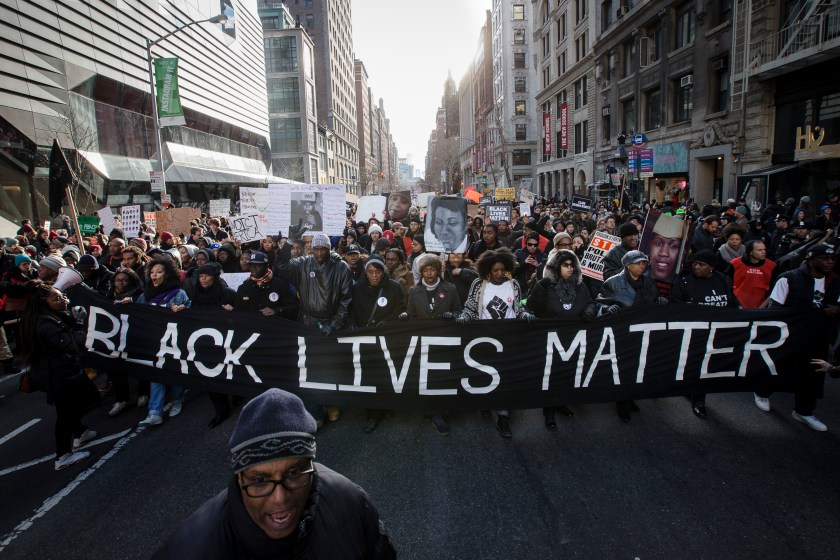
This essay tells the story of two men who explore their racial differences. The one, Simple, is black, and narrator is white. They sit on the porch stoop and talk about the music that's playing. The narrator doesn't enjoy it because he can't understand it, while Simple explains that it's music made by black people for black people. The point of this essay is to prove that black people face difficulties that white people don't- which is obvious, but this essay provides a specific example that is relevant to today: police brutality. This was written in the year 1949, when racial discrimination was legal and segregation existed. It was written for white people to help them comprehend the struggles of being black, "White folks do not get their heads beat just for being white. But me- a cop is liable to grap be almost any time and beat my head- just for being colored." (Hughes,191) Today, the racial issue that has arisen is the idea of "Black lives matter" vs "All lives matter." What white people fail to understand, and what this essay helps to explain is that the Black lives matter movement doesn't put down white lives, but shines a light on what black people have to put up with because of their race. An important element that the author utilizes is the use of telling the story as a narrative. The characters put into perspective the differences between white and black people, particularly through the quote, "'Your explanation depresses me,' I said. 'Your nonsense depresses me,' said Simple." (Hughes 192) A white person finding out about what black people bo through is disgusted, while a black person is disgusted by white people's ignorance. The author is a black man who has experienced first hand the difficulties of being colored. He is able to successfully get his point across because he is able to put himself into his writing and convey emotions that can only come from experience.

The effects of police brutlity seen today.
Source: http://images.huffingtonpost.com/2016-07-15-1468604858-4887989-march6.jpg 

Coatesville

Essay: Coatesville, by John Jay Chapman

A year after the murder of a black man in Coatesville, Pennsylvania, John Jay Chapman visits the town to deliver a speech about hatred and racism. Chapman is an American author who attended Harvard University, and believes in the equality of all people. This speech was given during 1912, a time when discrimination against blacks was almost mundane. A black man had just been burned alive and the entire country stood and watched. This is why Chapman gives his speech. He wants to address the lack of response to this murder and try to prevent this from happening again. When this occured, if they weren't cheering it on, Americans were watching silently. Chapman is writing to all of America, which is revealed when he writes,"All of us are tinctured by it. No special place, no special persons, are to blame. A nation cannot practice a course of inhuman crimw for three hundred years and then suddenly throw off the effects of it." (Chapman, 73) He wants the entire country to make an effort to prevent this from happening again. Something important that Chapman does is use the word "us." This inclusion of himself makes it seem less like he is pointing the finger at everyone else, and more like a group effort is required to make progress. This makes his argument more appealing, and makes him more successful in accomplishing his purpose. He is able to accurately get his point accross while maintaining a positive tone and minimal blaming. It could be argued that this essay has impacted America's views on racism and helped promote the end to racial discrimination.

Lynching of Zach Taylor, 1911

source: https://stumblingintheshadowsofgiants.files.wordpress.com/2013/10/zack-walker-coatsville-lynching.jpg